
Mia Hoffmann · 4 September 2026
The Influence of Blended Material Metaphors on Trust Building in Digital Privacy Solutions
Digital privacy solutions have incorporated blended material metaphors for years, drawing from physical objects such as locks, vaults, and shields while integrating flat design principles and subtle gradients that suggest depth without literal realism; these combinations create interfaces where users interact with privacy controls that feel tangible yet remain screen-based. Researchers have examined how such visual strategies affect user perceptions of security, noting that consistent application of these metaphors often correlates with higher engagement rates in privacy settings across various platforms.
Defining Blended Material Metaphors
Material metaphors in digital design refer to the use of visual cues inspired by real-world substances, and when blended they merge elements like metallic sheen with matte surfaces or transparent overlays that mimic glass alongside wooden textures representing stability; this approach emerged as designers moved beyond pure skeuomorphism toward hybrid styles that balance familiarity with modern aesthetics. Data from interface studies indicate that users respond more positively when these metaphors align with the function they represent, such as a padlock icon featuring both chrome highlights and soft shadow layers that suggest both strength adn approachability.
Experts have observed that blending occurs at multiple levels, including color palettes that evoke aged leather for archival data alongside clean lines for active encryption toggles, and this layering helps convey layers of protection without overwhelming the layout. According to findings released by the Office of the Privacy Commissioner of Canada in a 2025 analysis, interfaces employing these blended cues showed measurable differences in how participants navigated consent flows compared to purely minimalist versions.
Mechanisms of Trust Formation
Trust in digital privacy tools develops through repeated visual confirmation that the system appears robust, and blended material metaphors contribute by providing immediate associations with physical security objects while softening them through contemporary rendering techniques that reduce cognitive load. Studies have shown that when a privacy dashboard incorporates a vault door rendered with both riveted steel plates and subtle light refraction effects, users report greater willingness to configure advanced settings rather than accepting defaults.
What's interesting is how these metaphors interact with user expectations formed outside digital environments; people often bring assumptions from physical security hardware, and blended designs bridge that gap by avoiding both cartoonish exaggeration and sterile flatness. Research indicates that inconsistent blending, such as mixing heavy textures with overly bright neon accents, tends to disrupt the trust signal and leads to higher abandonment rates during setup processes.
Evidence from Recent Implementations
Multiple organizations have tested blended metaphors in production environments, with results tracked through A/B deployments that measure completion rates for privacy configurations and subsequent data-sharing behaviors. In one documented rollout, a European banking application updated its data access controls to feature cards with layered paper-like surfaces over metallic borders, resulting in documented increases in users reviewing their permission histories. The European Data Protection Board has referenced similar patterns in guidance materials that highlight how visual consistency supports regulatory compliance goals without mandating specific design languages.
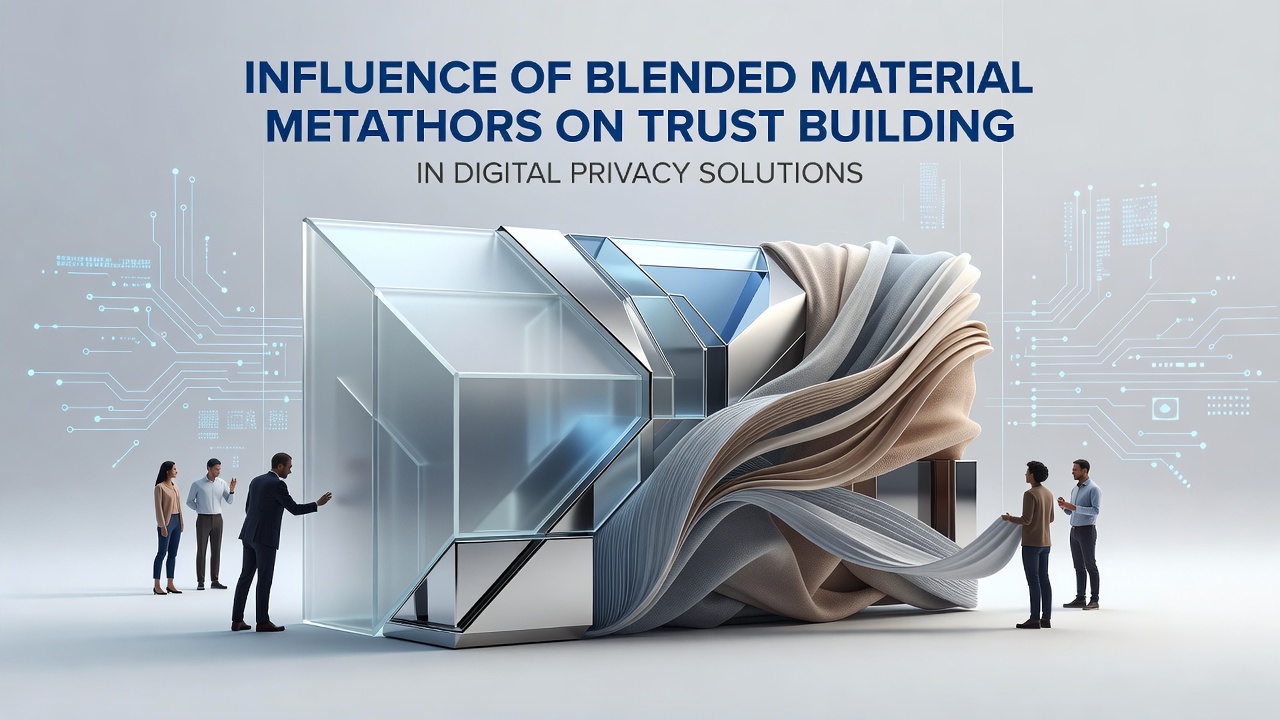
September 2026 saw the publication of longitudinal data collected across North American and Asia-Pacific regions, where teams compared trust metrics before and after introducing blended elements into mobile privacy centers; the figures revealed that retention of custom privacy profiles rose when metaphors combined familiar industrial materials with soft UI transitions. Observers note that these outcomes held across age groups, though the strength of the effect varied depending on prior exposure to similar design languages in other applications.
Challenges in Application
Implementing blended material metaphors requires careful calibration because excessive layering can create visual noise that undermines the very sense of control these designs aim to convey. Teams responsible for privacy interfaces have reported that testing across devices with different screen technologies becomes essential, since metallic reflections render differently on OLED versus LCD panels and may alter the intended perception of solidity. Data collected by academic groups at institutions in Australia and the United States show that accessibility considerations also play a role, as high-contrast versions of blended textures sometimes reduce the metaphor's effectiveness for users relying on screen readers or simplified modes.
Yet the reality remains that poorly executed blends risk signaling unreliability, which can erode trust faster than a neutral flat design; regulatory bodies in multiple jurisdictions have therefore encouraged iterative user testing rather than prescriptive visual standards.
Conclusion
Blended material metaphors continue to shape how digital privacy solutions communicate reliability to users through carefully combined visual references to physical security objects and modern interface techniques. Evidence gathered from diverse implementations demonstrates measurable impacts on user behavior when these metaphors are applied consistently and tested across contexts. As platforms evolve, ongoing collection of interaction data will likely refine understanding of which specific combinations most effectively support trust without introducing new friction points.